Hotel & Hospitality Smart Café Vending Solutions
Deliver 5-Star Food Service When Your Kitchen Closes
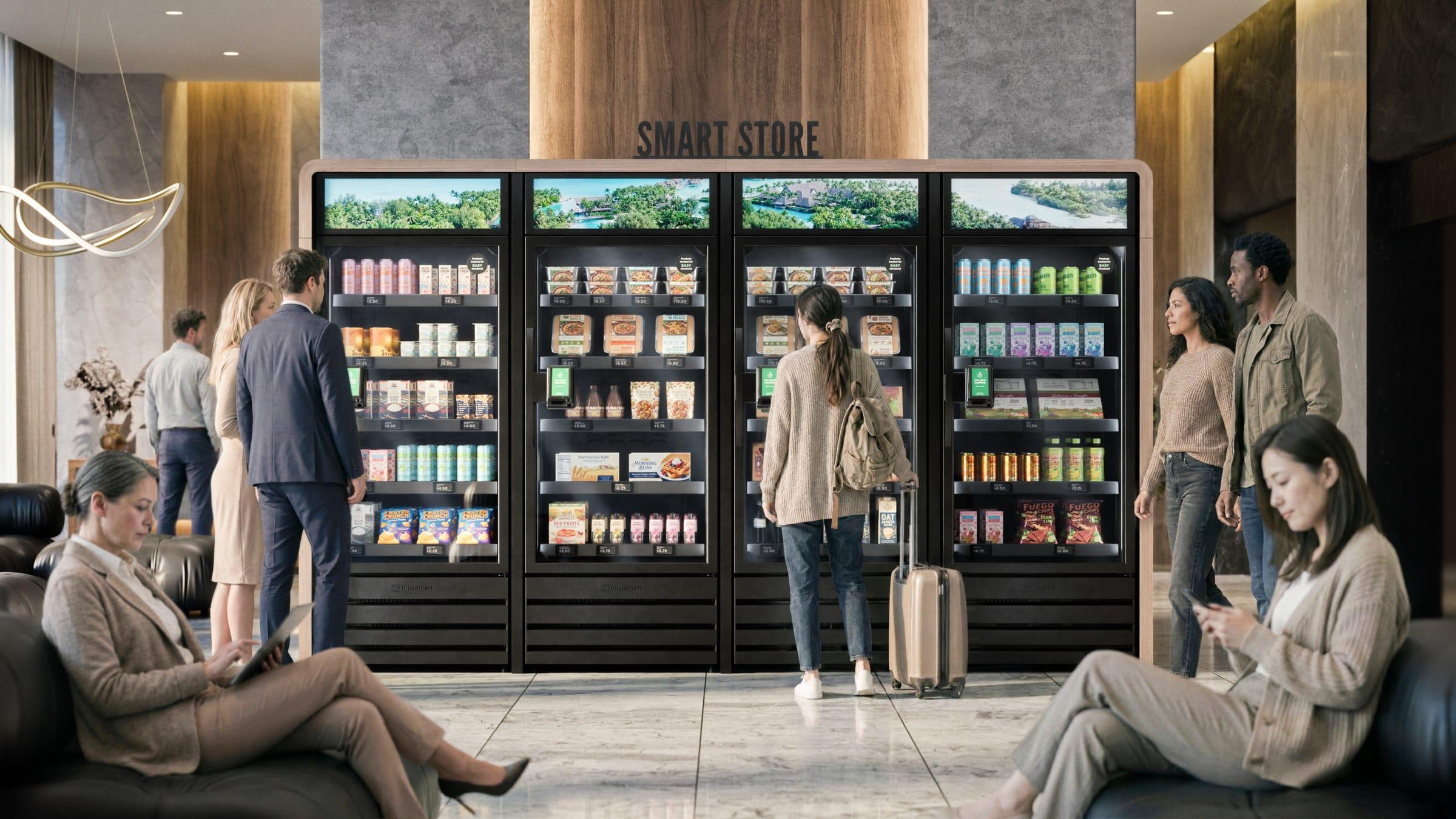
Raptor Vending brings San Antonio smart vending and a guest Smart Café to hotels, with grab-and-go gourmet meals after the kitchen closes. Room service ends at 10 PM, but your guests’ hunger doesn’t. Our Smart Café micromarket provides luxury hotel guests with 24/7 access to chef-prepared meals, gourmet snacks, and premium beverages — maintaining your property’s high standards around the clock. Through our partnership with Southerleigh Hospitality Group, we bring restaurant-quality dining to your lobby, pool deck, or executive floors without the labor costs of overnight kitchen staff.
Why Premium Hotels Choose Raptor’s Guest Smart Café
Exceed Guest Expectations Without Extending Kitchen Hours
Chef-Crafted Meals Match Your Brand Standards
Southerleigh Hospitality Group prepares gourmet meals that align with your property’s culinary reputation — no more apologizing for vending machine dinners.
Elegant Design Enhances Your Space
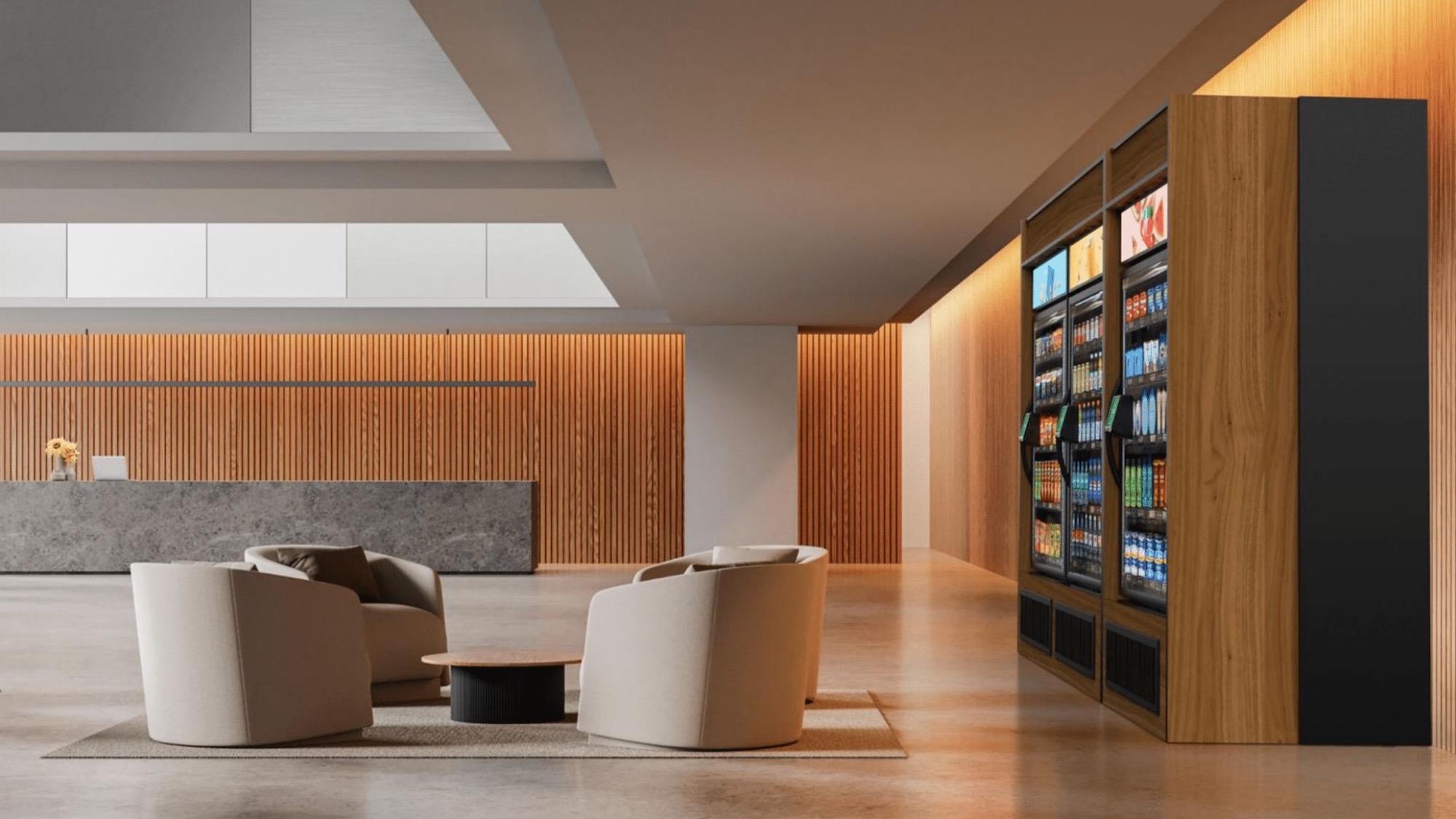
Our premium Smart Fridge™ (an AI smart cooler) + Smart Cooker™ (hot food vending) system features sleek aesthetics that complement luxury interiors, not detract from them like traditional vending.
Capture Lost Revenue After Hours
Convert late-night guest hunger into incremental food sales when your restaurant and room service are closed — especially valuable for airport hotels and business properties.
Instant Guest Satisfaction, Zero Labor Cost
Eliminate complaints about limited food hours while avoiding expensive overnight kitchen staffing — guests serve themselves with contactless convenience.
Strategic Placement Flexibility
Install in lobbies for all guests, on executive floors for VIPs, near pools for resort properties, or in employee areas — wherever food access adds value.
Group & Event Support
When wedding parties, sports teams, or conferences strain your F&B operations, Smart Café provides overflow capacity without overwhelming your kitchen.
The hours a kitchen cannot cover
Every hotel has the same gap. The restaurant closes, room service winds down or was never offered, and from then until breakfast the honest answer to a hungry guest is a vending machine in a corridor or a drive somewhere.
A Smart Café closes that gap without rostering anyone to cover it. The meals are cooked by Southerleigh Hospitality Group, delivered chilled and sealed, and held in a locked cabinet until a guest wants one. The Smart Cooker™ heats it by induction in under 7 minutes, in the pod it was sealed in, so nothing is plated, handled or left under a lamp.
It is worth saying what this is not. It does not replace a restaurant, and it does not replace room service where room service is working. It covers the overnight, the early start, the guest who lands at eleven, and the floors a kitchen was never going to reach.
The comparison most hotels are really making is not against their own kitchen at all. It is against the corridor machine on the third floor and the petrol station four minutes away, both of which a guest will use at midnight and neither of which reflects well on the property in a review the next morning.
Three steps, no desk
Tap a card or a phone
The cabinet is locked until it knows who is there. Nothing is charged yet, and there is no app to download and no account to open.
Take the meal
Open the door, take what you want, put back anything you change your mind about. Cameras inside track what leaves, so the charge matches exactly what was taken.
Heat it in under 7 minutes
The Smart Cooker™ heats three meals at once per tower, which matters more in a hotel than an office: arrivals cluster, and a coach party at midnight is a real thing.
What the hotel provides, and what it does not
A dedicated 30A, 120V circuit
For the Smart Cooker™. The Smart Fridge™ runs on a regular 120V outlet and needs no circuit of its own.
A network connection
WiFi or a hardwired Ethernet cable, one port. Cellular is a backup rather than the main link.
About 50 square feet
A lobby corner, a pantry, an executive floor or beside the pool deck. No plumbing, no hood, no construction and nothing closed for long.
No fee of any kind
Raptor charges no placement fees and no minimums, and never invoices the hotel for the program. Restocking, cleaning, repairs, the menu and the marketing are Raptor's. The hotel's only cost is the electrical and network work above.
What runs in the background
The cold side is watched. The Smart Fridge™ holds 32 to 38°F and its temperature is tracked around the clock with alerts, so a cooling fault reaches Raptor rather than a guest. Anything past its freshness window cannot be sold: the cabinet will not release it, which does not depend on a night manager checking dates.
The stock is watched too. Every cabinet reports what it holds, so restocking is scheduled against what guests are actually taking rather than a fixed route. Most faults are fixed remotely before anyone notices, and a guest who does need to report something uses the code on the cabinet, which opens the help page with the property already filled in, at any hour.
The hotel gets a usage report every month: transactions, popular items, usage patterns and restock performance. For a general manager that is the answer to whether the overnight offer is being used, which is otherwise a matter of opinion.
The agreement
Infrastructure agreements run five years, and either party can exit if a problem is not cured within 30 days. Before that there is a 120-day trial with the full installation rather than a demonstration unit, because an overnight amenity proves itself over months of occupancy rather than in a week.
Where it goes, and who uses it
Placement decides usage more than the menu does, and in a hotel there are really only three candidates.
The lobby is the obvious one and usually the right one. It is the space every guest crosses, it is lit and covered by cameras already, and a cabinet there is visible at the hour it matters without anyone having to find it. The cost is that it has to look like it belongs, which is why the enclosures are specified rather than left as bare appliances.
An executive or club floor is the second. The audience is smaller but it is the audience most likely to arrive late and least likely to go looking for food, and a floor that already promises something extra has somewhere obvious to put it.
A pool deck or fitness area is the third, and it behaves differently: more drinks and snacks than entrées, with the meals moving in the evening rather than the afternoon. The menu rotates either way, so the mix follows what the cabinet actually sells rather than a plan made before it arrived.
What all three have in common is that the hotel does not staff any of them. The decision is where the power and the network can reach, and how far a guest will walk at midnight, which is not very far.
Extended stay is a different pattern again
A guest staying three weeks does not behave like one staying a night. They buy breakfast repeatedly, they care about variety far more, and they will notice a menu that does not move. That is the case where the 15 entrée rotation does real work, and the case where a cabinet beats a corridor machine by the widest margin, because the alternative is the same packet every morning.
Frequently Asked Questions
Smart Café for hotels
How can a hotel offer food after the kitchen closes?
With a cabinet that does not need a kitchen behind it. Meals arrive cooked and sealed from Southerleigh Hospitality Group, sit chilled in a locked Smart Fridge™, and are heated by the Smart Cooker™ beside it in under 7 minutes.
That covers the hours a kitchen cannot: after the restaurant closes, before breakfast service, and the whole of the night shift, with nobody rostered to cover them.
Does this replace room service?
No, and it is not meant to. Room service is a served experience with a tray and a knock at the door. This is the opposite: a guest comes down, taps a card, takes a meal and heats it.
Where it earns its place is the hours room service is not running, and the guests who would rather not wait forty minutes for a club sandwich at eleven at night.
What does it cost the hotel?
Nothing to Raptor. No placement fees, no minimums, and the hotel is never invoiced for the program.
The hotel pays for its own electrical and network work: a dedicated 30A, 120V circuit for the Smart Cooker™ and a network connection. Guests pay for what they take, and a chef-made entrée is $12.50.
What does the hotel have to provide?
About 50 square feet, a dedicated 30A, 120V circuit for the Smart Cooker™, and either WiFi or a hardwired Ethernet cable. One port is enough; Raptor splits it to the rest of the equipment.
The Smart Fridge™ is plug and play on a regular 120V outlet. There is no plumbing, no hood and no construction, so a lobby or pantry can take it without closing anything down.
Who cooks the food?
Southerleigh Hospitality Group. Their restaurant, Southerleigh Fine Food & Brewery, has held a Michelin Bib Gourmand three years in a row. The meal brand is Sense of Occasion.
There are 15 entrées in rotation, with meat-free options and ingredients and allergens published for each, plus snacks and drinks. For a hotel that means the overnight option is a restaurant's cooking rather than a packet.
How do guests pay?
By tapping a card or a phone on the cabinet. There is no app, no account and nothing to charge to a room, which also means no folio disputes at checkout.
Nothing is charged until the door closes, and the charge matches what was taken.
Is it secure overnight with nobody on the desk?
The cabinet is locked and opens only after a payment card or phone has been verified, so nothing is reachable by someone who has not identified themselves. Cameras inside track what leaves the shelf.
That is a different proposition from an open pantry shelf, which relies on the honesty of everyone who walks past it at three in the morning.
How long does installation take?
Four to six weeks from a signed agreement, and most of that is the hotel's own electrical work. Once the circuit and network connection are in and tested, putting the cabinets in takes two to four hours.
It starts with a 30 to 45 minute assessment of electrical capacity, the network and where the cabinets would sit, and a written proposal within five days.
Schedule a Tasting
Experience the Raptor Vending difference firsthand. Schedule a free product tasting at your property and explore the variety of hot meal menu items from Southerleigh. We’ll bring a curated selection directly to you, so you and your team can sample what sets our smart vending machines apart — no pressure, no commitment.
- Great for larger groups of 10 or more
- Choose up to (4) menu options
- We bring the food to you!
Calendar not loading? Open it in a new page or call (385) 438-6325.