Government & Municipal Building Vending Solutions
Hot Chef-Made Meals for Public Buildings, at Every Hour They Are Open
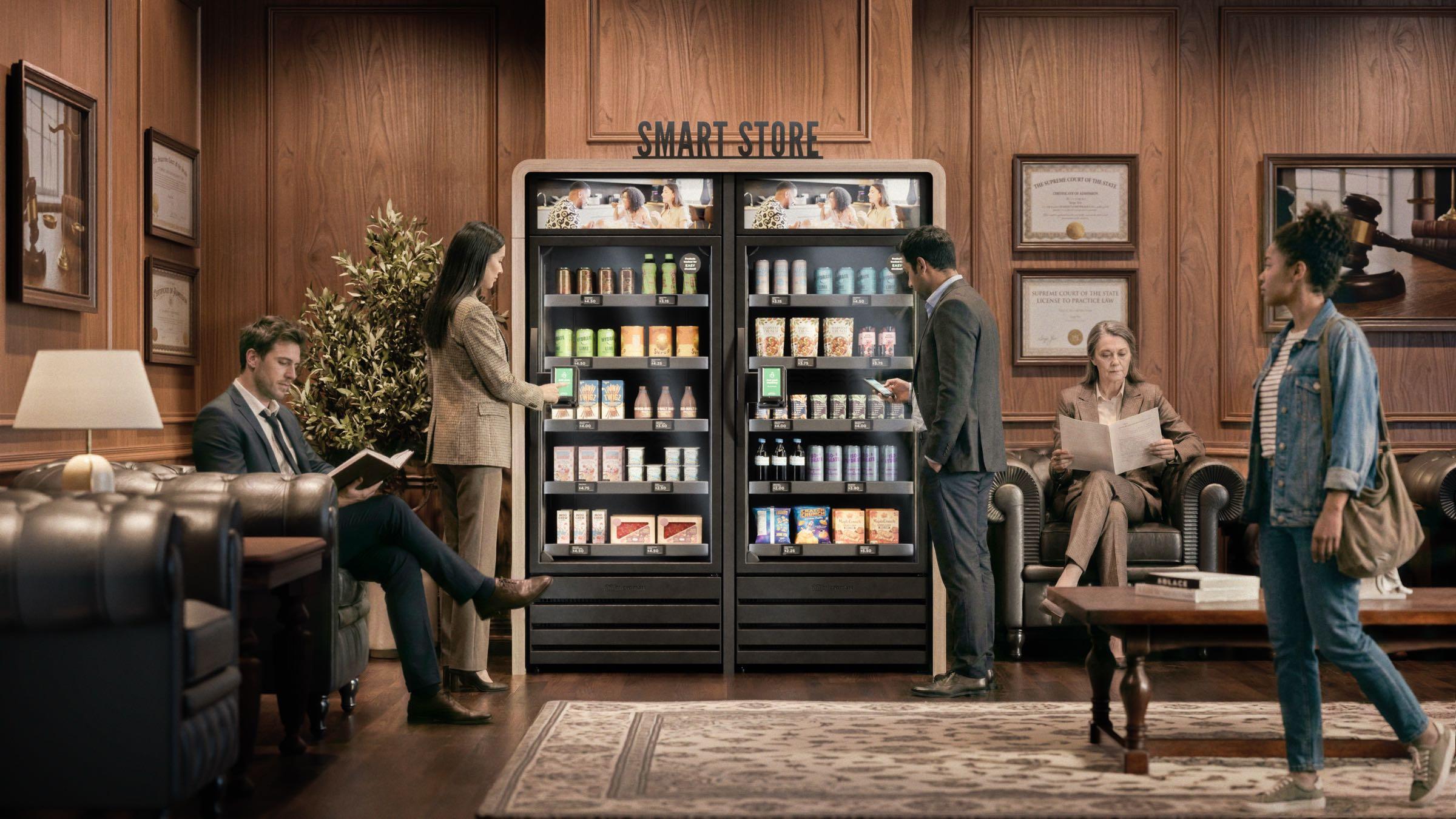
A locked Smart Fridge™ and a Smart Cooker™ put a chef-made hot meal in a courthouse, a city hall or a dispatch center, with no staff to roster, no cash to handle and nothing invoiced to the building.
Raptor Vending brings San Antonio smart vending and a micromarket to government and civic buildings, with grab-and-go gourmet meals around the clock. Our Smart Café micromarket turns a corner of a lobby, a break room or a staff floor into a food option that holds up for the people who cannot leave the building and the public waiting in it. Through our partnership with Southerleigh Hospitality Group, we bring restaurant-quality meals, snacks and drinks into the building without the staffing, the kitchen or the budget line a served program asks for.

A public building keeps hours that nothing around it keeps
Most public buildings were designed on the assumption that people would leave them to eat. For a lot of the people inside one, that assumption stopped being true some time ago.
A juror is held in a building all day and is not free to wander off to find lunch. An attorney between hearings has the length of a recess. Counter staff at a permits window or a tax office get a fixed break and a queue waiting when they get back. Dispatchers and emergency operations staff work through the night in a building where nothing has been open since five. Public works and fleet crews start before anything is serving breakfast.
What those hours get today is a bank of machines selling packets, a break room microwave with a queue, or a walk off site and back through screening. None of those is a meal, and in a building with security at the door the last one costs more time than the meal is worth.
The cabinet does not fix this by being a better vending machine. It fixes it by not needing anyone to be there.
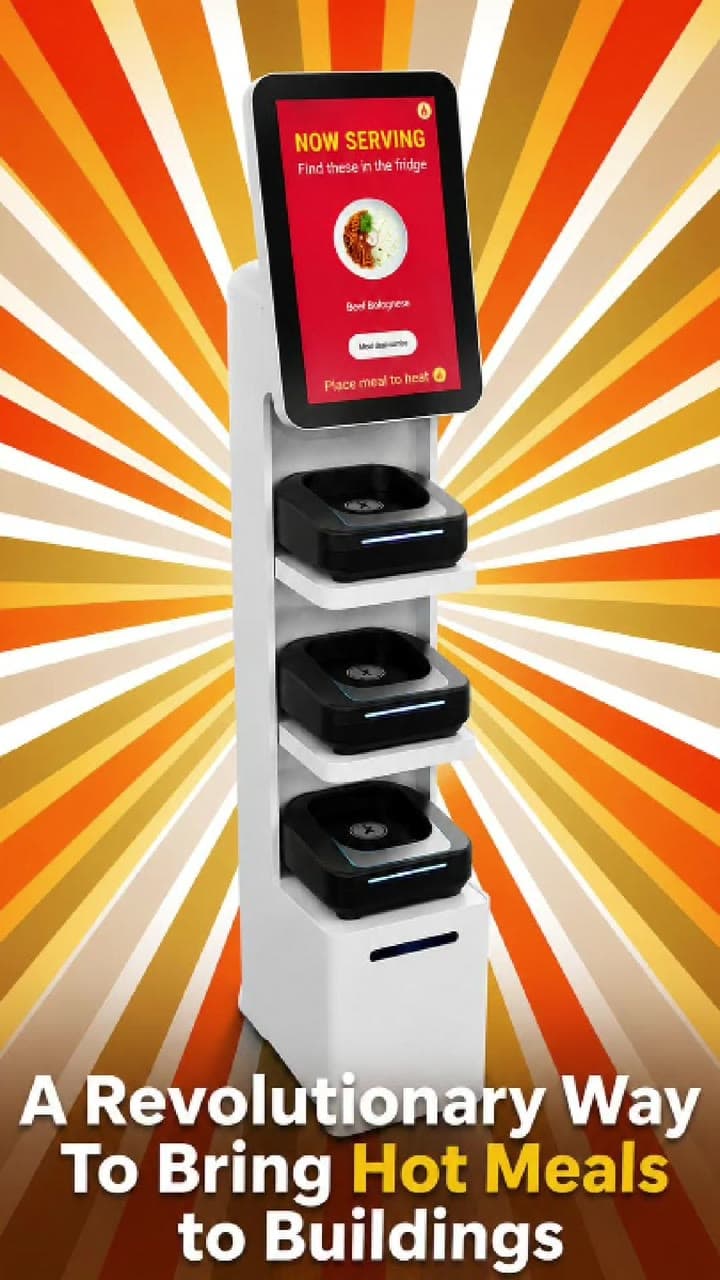
It is locked, it opens on a card or a phone tap, and it holds chef-made entrées from Southerleigh Hospitality Group chilled and sealed until somebody takes one. The Smart Cooker™ beside it heats a meal by induction in under 7 minutes, three at a time per tower, which is sized for a recess or a shift change rather than for one person at a time.
Nothing about that asks the building to run anything. No till to reconcile, no cash to collect, no stock to count, no staff to roster and nobody to train.
How It Works for a Tenant
Grab
A tenant chooses a fresh chef-prepared entrée from the Smart Fridge™ and taps a card or phone. The door unlocks, they take what they want, and they are charged automatically for exactly what they took.
Cook
The sealed meal goes into the Smart Cooker™. Induction heating cooks it to serving temperature in under 7 minutes. Not reheated, cooked.
Eat
Restaurant-quality food on a break, on any shift, at any hour. New menu rotations keep it interesting.
Where it goes in a public building
The cabinets need a conditioned space, a circuit and a network connection. That puts most of a public building in range, and the question is usually which parts of it hold people past the hours anything nearby is open.
Courthouses
Jurors who cannot leave, attorneys between hearings, clerks and bailiffs, and a public waiting on a docket that is running late. A building where going out to eat means going back through screening.
City halls and county administration
Counter staff on fixed breaks, evening council and commissioners court meetings, and residents waiting their turn at a permits or tax window.
Public safety and dispatch
Around the clock, in a building where nobody can step away for long and nothing nearby is open at three in the morning.
Public works, fleet and utility yards
Crews starting before dawn and coming back off a route. Usually the site furthest from anywhere selling food.
State agency offices
Regional and field offices with real headcount and no food service of their own. Worth reading the vendor priority question in the FAQ below before going far.
Libraries, community and senior centers
Long public hours, evening programs and weekends, in buildings that rarely have anything but a machine in the hallway.
The food
This Is What’s in the Fridge
Chef-prepared entrées from Southerleigh Hospitality Group, Michelin Bib Gourmand three years in a row, rotated weekly. Alongside them, the snacks and cold drinks people buy every day: nine in ten items sold are those, and the meals are the part we brought to Texas first.
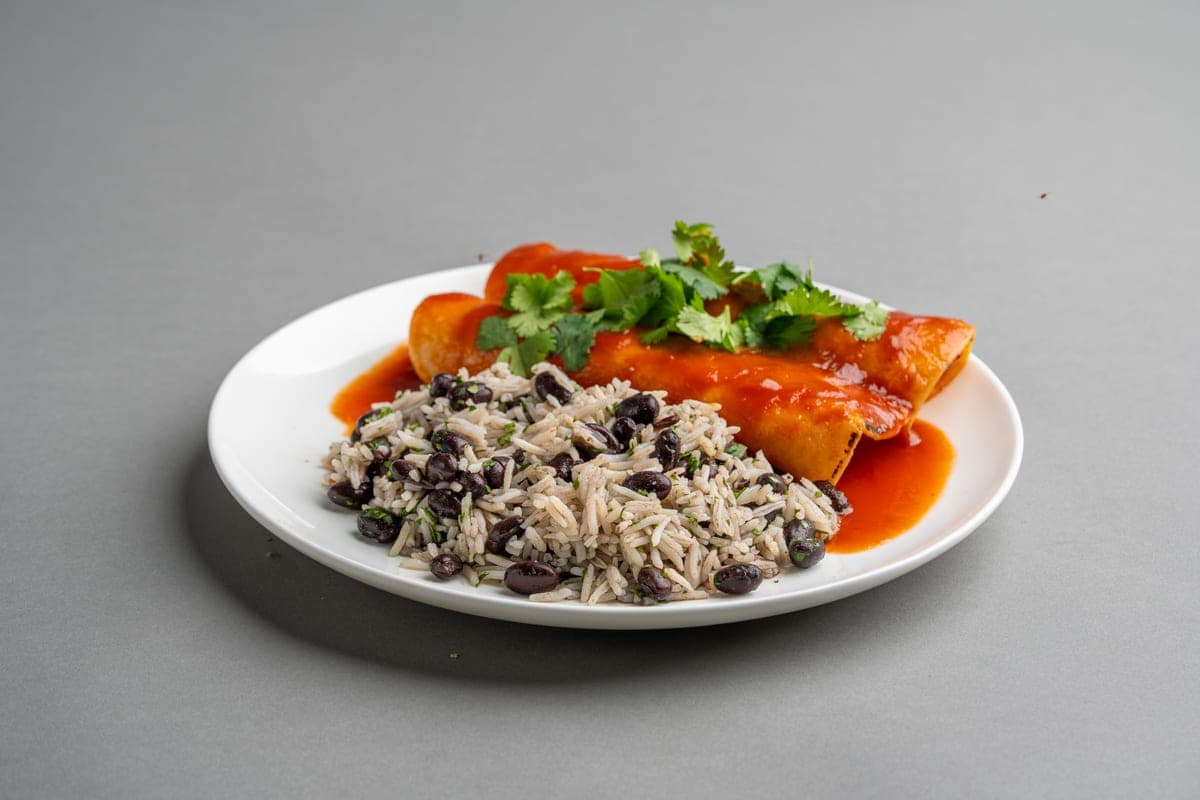
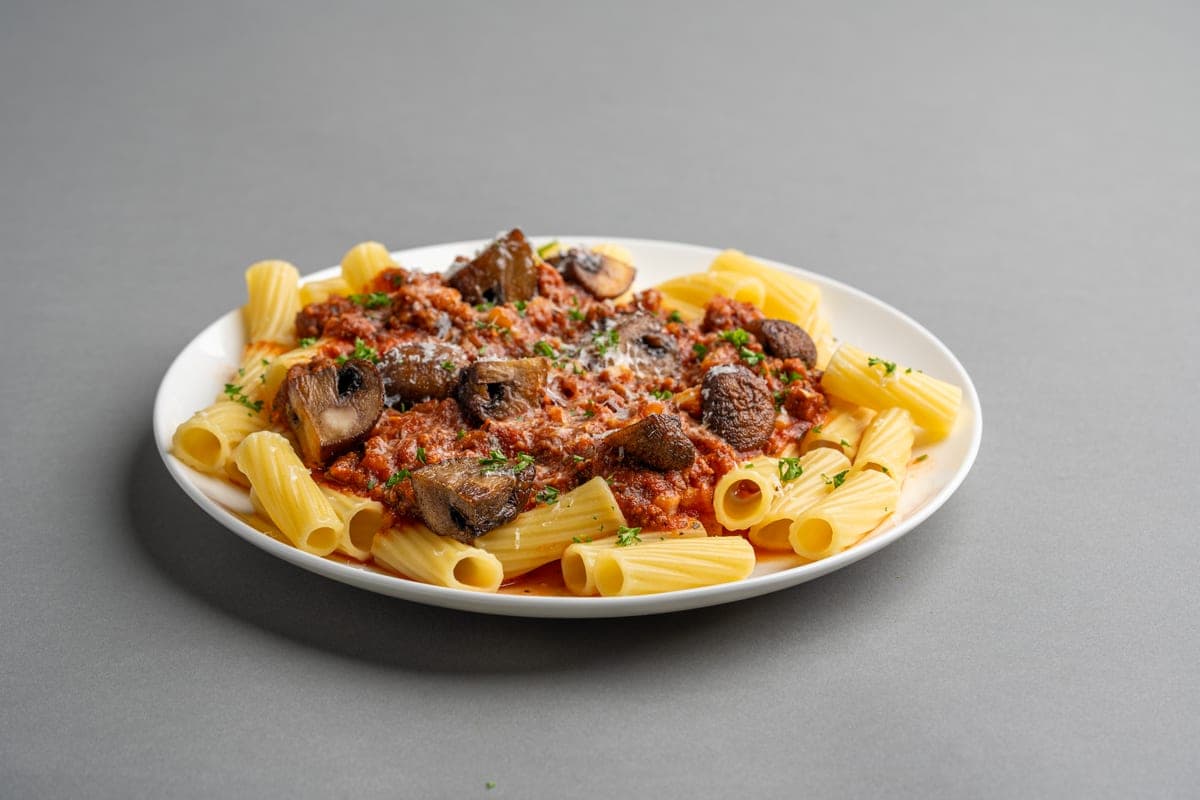
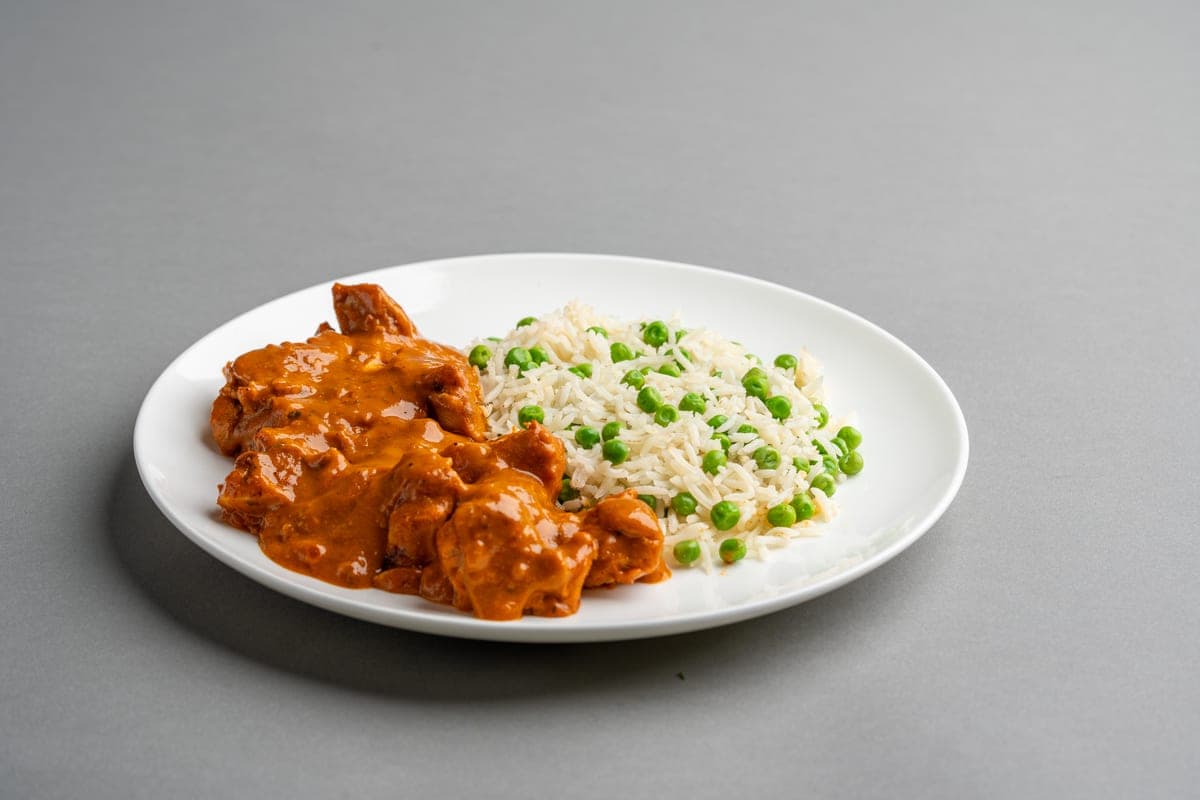
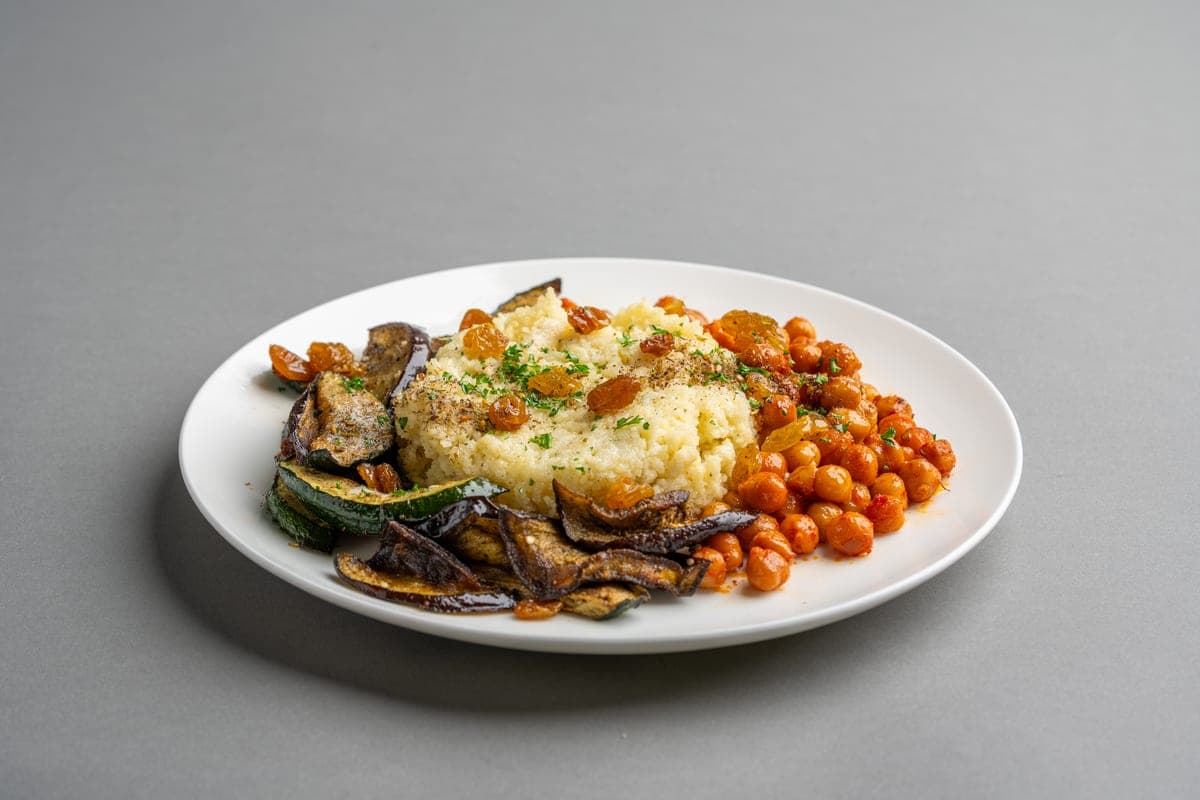
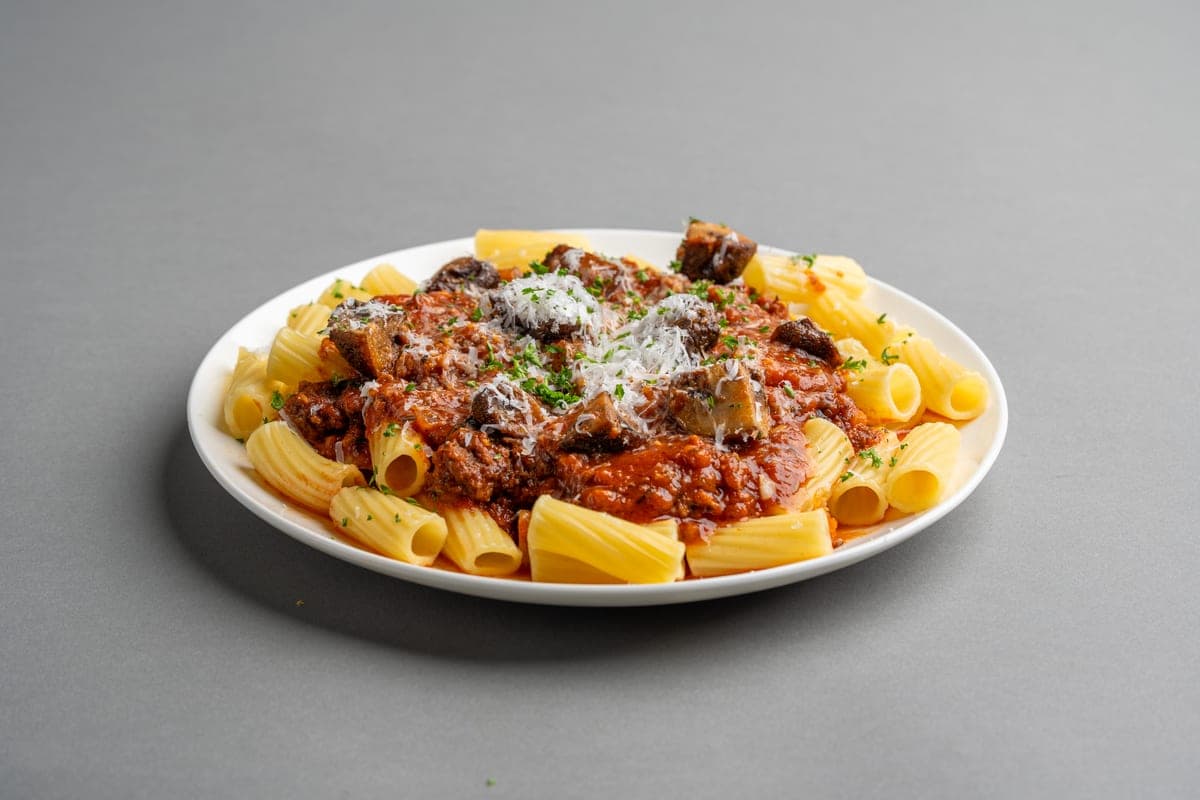


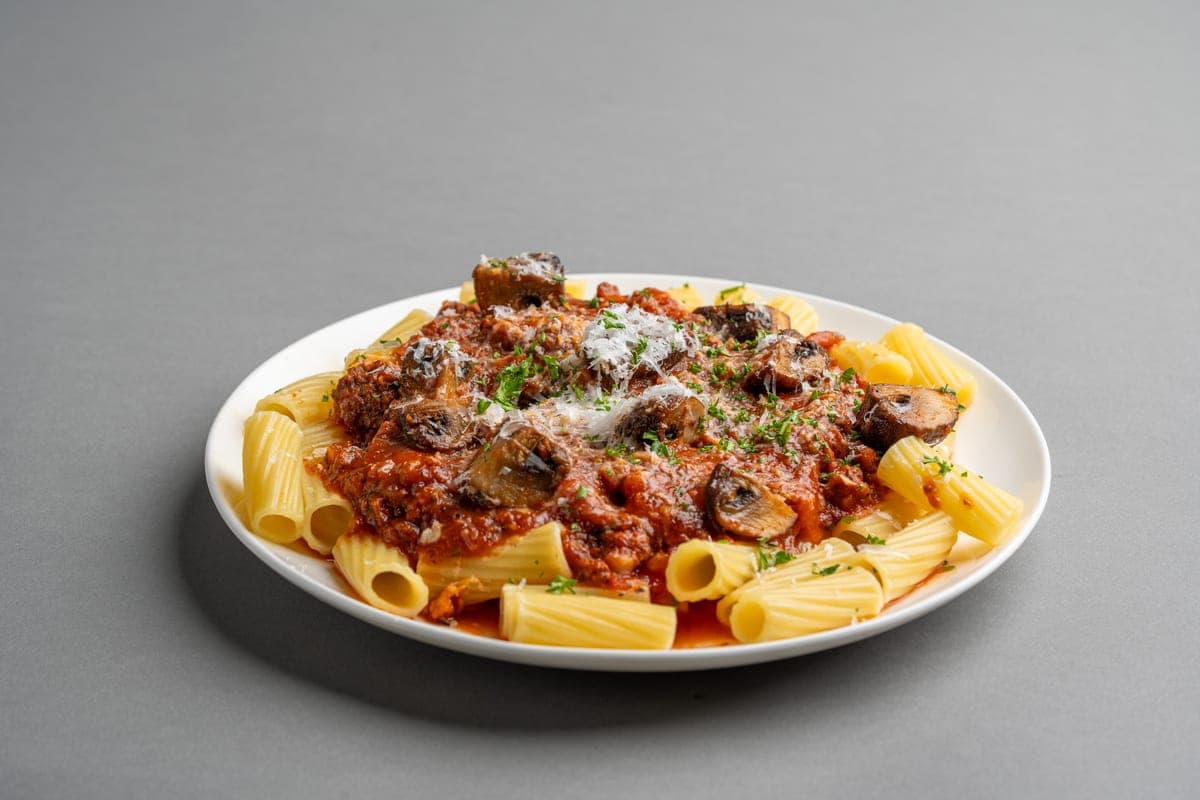
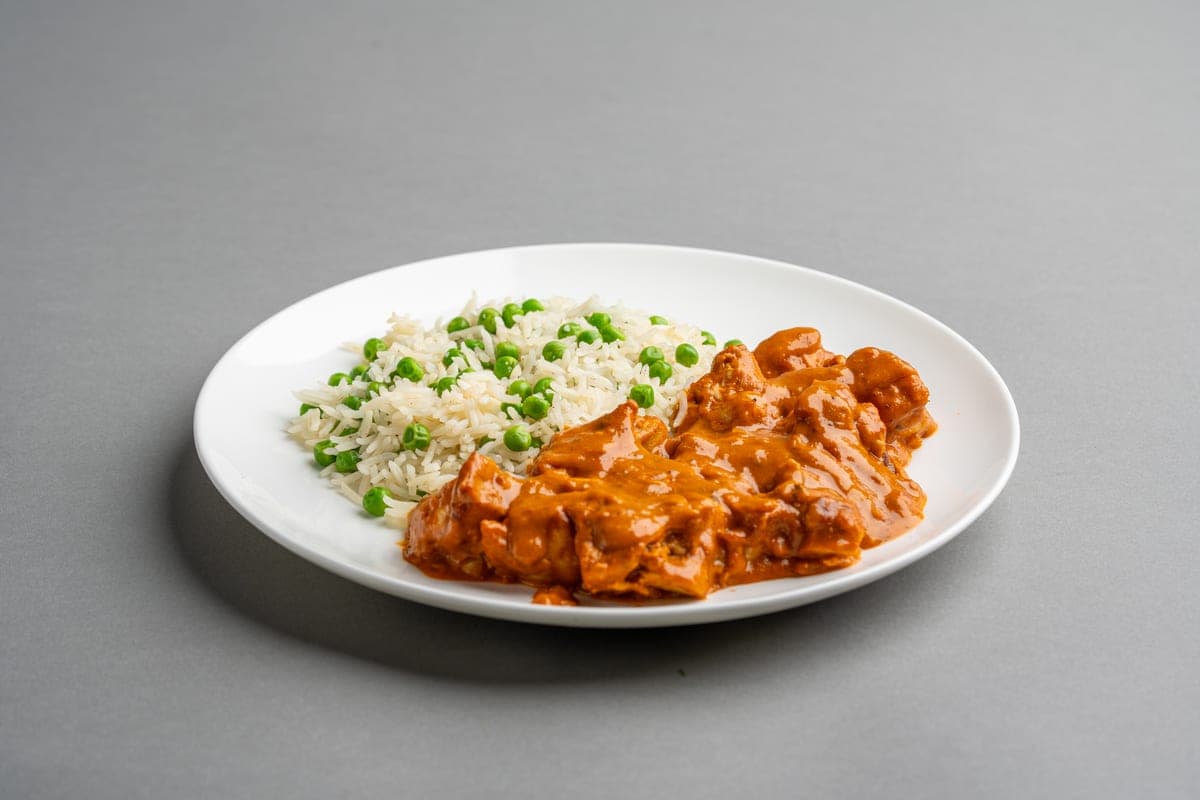
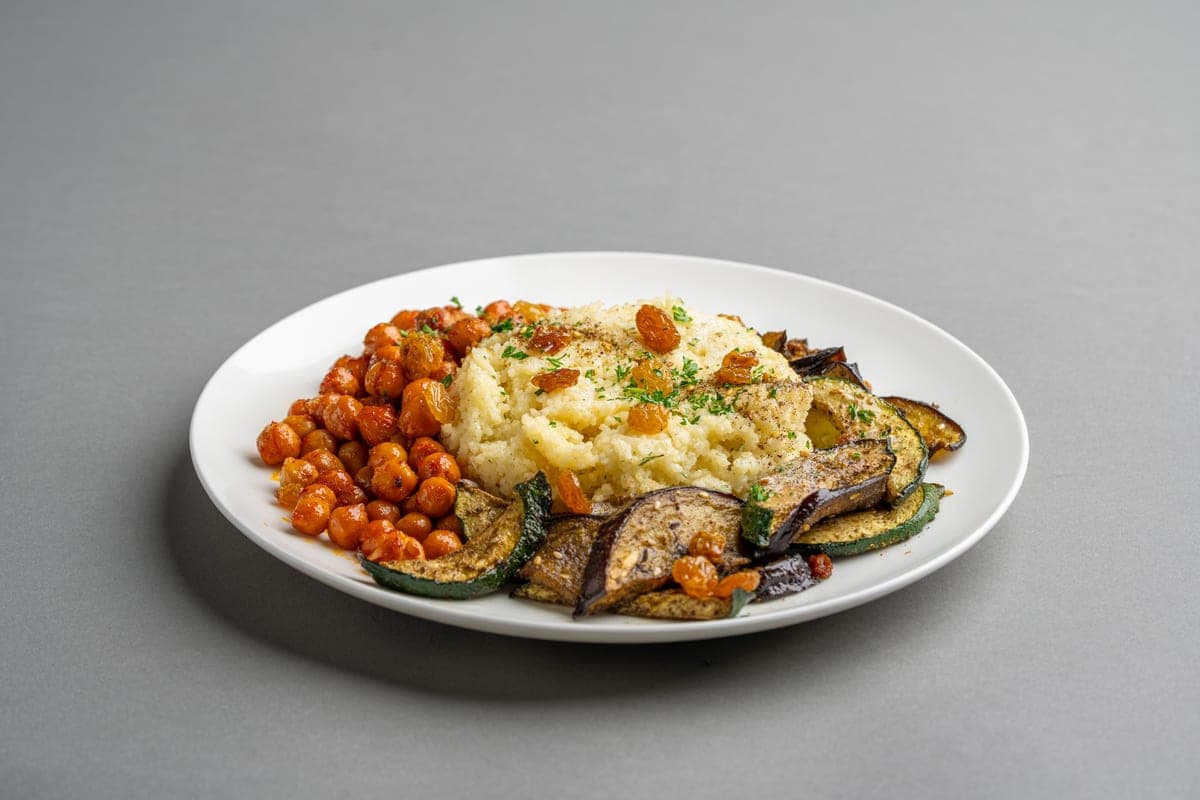
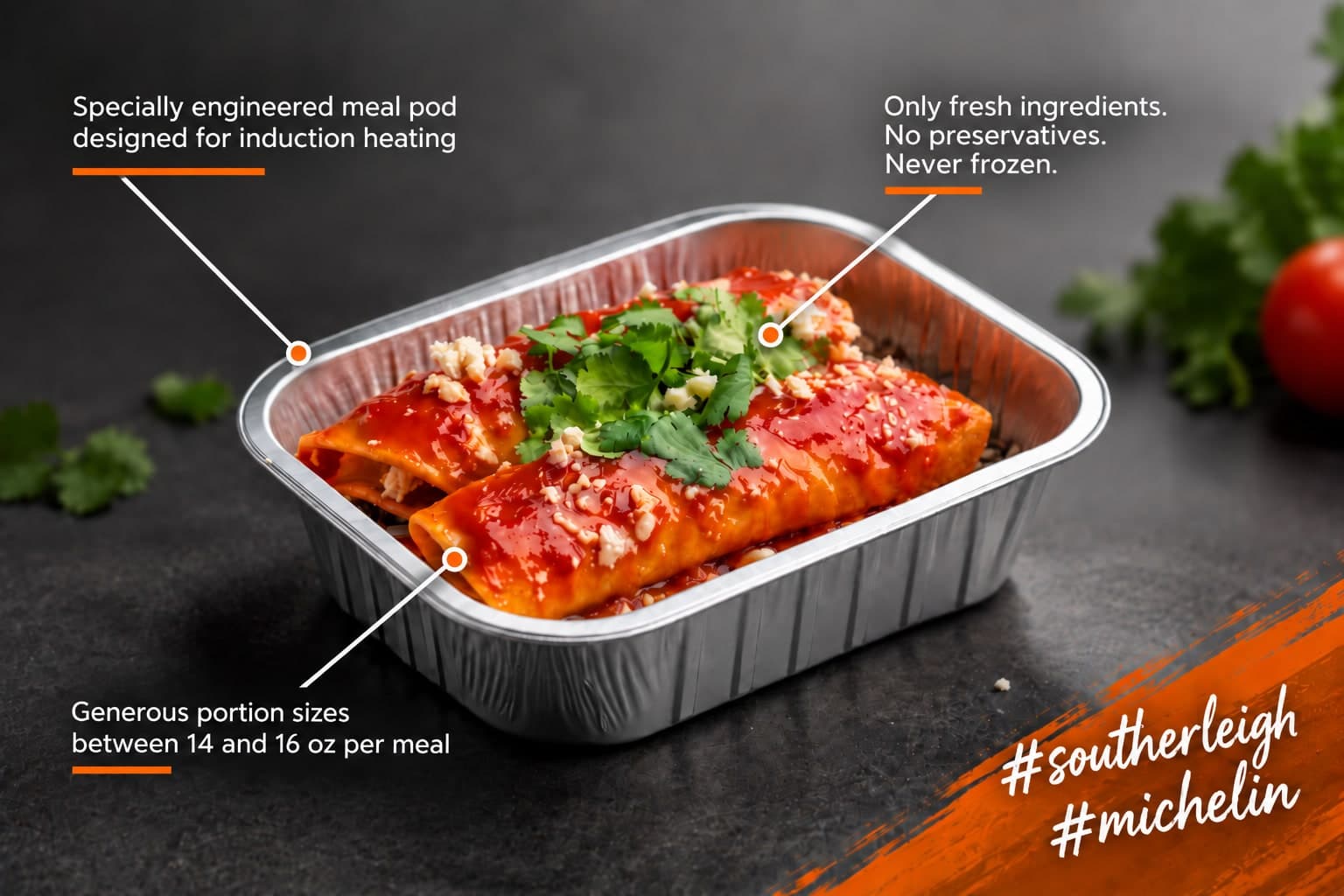
Rotating menus. Real portions. $12.50.
A locked cabinet in a building open to the public
Security is usually the second question a public building asks, and it is the one the cabinet answers best.
It is locked. It opens only after a payment card or a phone has been verified, so nothing is reachable by somebody who has not identified themselves first. Cameras inside track what leaves the shelf and the charge matches it. That is a different proposition from open shelves in a public lobby, which rely on the honesty of everyone who walks past them.
There is no cash in it. Nothing to collect, nothing to count, nothing to reconcile and nothing worth forcing open, which removes a category of problem a coin mechanism in a public building creates on its own.
It also takes a reason to open the door out of the building. A delivery driver who has to be let past screening, a juror walking out to the street and queueing to come back in, a night shift leaving a dispatch floor short: food that is already inside the building does not generate any of that.
What Goes in the Building
How it is stocked depends on what the building already has. Where there is no other food on site, the fridges carry snacks and cold drinks alongside the hot entrées, so the whole amenity sits in one place. Where a micromarket or cafeteria already covers that, we run meals only and stay out of their category.
Meals only asks more of the building. Hot entrées are a narrower basket than a full market, so the traffic has to carry it: a substantial tenant headcount on site, or steady transient footfall through the lobby.
Typical commercial building
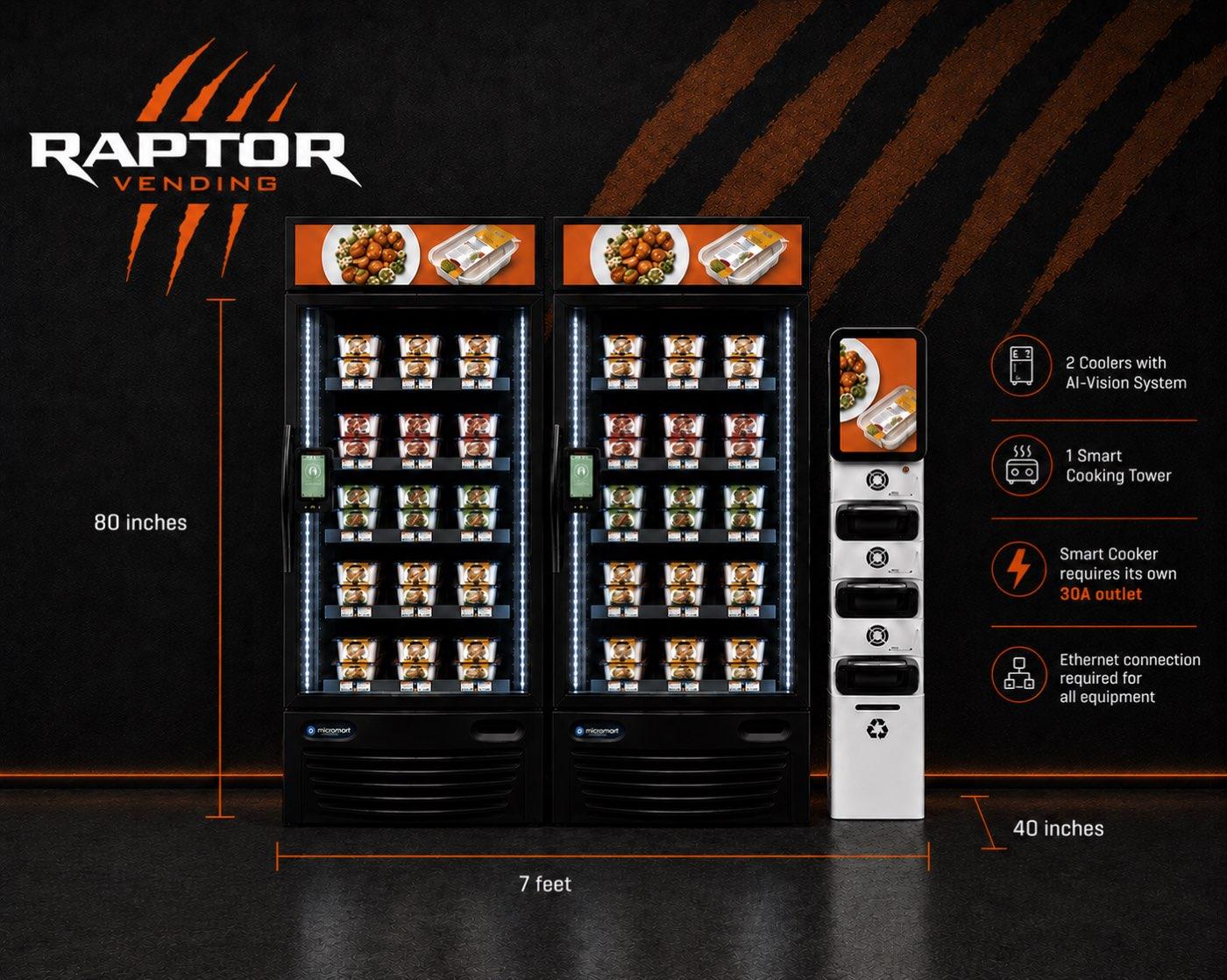
Two Smart Fridges and one Smart Cooker in the main common area. Each fridge holds up to 60 meals. The cabinets gang together, so where demand runs ahead of that we add another fridge or another cooker rather than replacing anything.
Smart Fridge™
A tap-to-open cooler stocked with drinks, snacks and chef-prepared entrées. Computer-managed inventory means what’s inside is tracked, rotated, and always in date. Remote digital price tags on every item.
Smart Cooker™
Raptor was the first in the U.S. to operate this induction meal cooker. It doesn’t warm food like a microwave; it cooks it: crisp, even, chef-intended results in under 7 minutes. Each tower cooks three meals at once.
What the building provides
A dedicated 30A, 120V circuit for the Smart Cooker™, and either a WiFi connection or a hardwired Ethernet cable. One port is enough; we split it to connect all of the equipment. Cellular is a backup only. The Smart Fridge™ plugs into a regular outlet. No plumbing, no gas, no hood, no grease interceptor, no structural work. The full electrical and network requirement is in the spec sheet below.
Connected and monitored
Every cabinet is on the internet. We are alerted the moment one goes down, and we can remote in to power cycle or reset it rather than dispatching to your site.
Battery backup
Each fridge carries its own battery backup, keeping the meals inside cold for up to 8 hours through a power loss.
Contractor specifications
Electrical and network requirements for a Smart Fridge™ and Smart Cooker™ installation, plus space, layout and compliance notes. Hand this to your facilities or contracting team.
Download the specsPDF · 193 KB
What it costs the entity, and what it does not
Raptor charges no placement fees and no minimums, and never invoices the building for the program. Restocking, cleaning the cabinets, repairs and the menu are Raptor's. Staff and the public pay for what they take, and a chef-made entrée is $12.50.
What that means for a public entity is narrower and more useful than a discount: there is no recurring spend to carry, no subsidy to defend at budget and no contract minimum to hit in a quiet month. What the building spends is its own electrical and network work at install, once. How that work gets procured is your process; Raptor's part of it is the specifications your facilities team needs to scope it, which are in the band above.
The cabinets are watched so that nobody in the building has to. The Smart Fridge™ holds 32 to 38°F and its temperature is tracked around the clock with alerts, so a refrigeration fault over a long weekend becomes a message to Raptor rather than a discovery on Monday. Anything past its freshness window cannot be sold at all: the cabinet will not release it. Every cabinet reports what it holds, so restocking runs against what the building is actually taking, and the building gets a usage report every month: transactions, popular items, usage patterns and restock performance.
Anyone who needs to report a problem uses the code on the cabinet, which opens the help page with the building already filled in, at any hour.
The agreement, and where this does not fit
Infrastructure agreements run five years. Either party can exit if a problem is not cured within 30 days, which is the term that matters: the length is not a trap if the service stops being good. Before any of that there is a 120-day trial with the full installation rather than a demonstration unit. The building is not invoiced during it, and is not invoiced after it either.
Where it does not fit
Worth saying plainly. A building with a staffed cafeteria running the hours its people actually work already solves this, and a cabinet beside it is redundant rather than complementary. A small field office with a handful of staff may not generate enough demand to keep a chilled rotation moving, and stale stock is worse than no stock.
The case where it clearly works is the common one: real headcount or real public footfall, held in the building past the hours anything around it is open, with nothing but a machine in the hallway today.
Frequently Asked Questions
Vending and micromarkets for government and civic buildings
Can a city or county building get a micromarket or Smart Café?
Yes. The same cabinets Raptor installs in office buildings run in a courthouse, a city hall or a county annex, usually off a lobby, in a break room or on a staff floor.
San Antonio is the operating market, so a building here can be surveyed and installed without waiting on a route from another city. The assessment is a 30 to 45 minute visit, and a written proposal follows within five days.
Does the blind vendor priority apply to our building?
It may, and it is worth settling before anything else. Under the federal Randolph-Sheppard Act, administered in Texas by the Texas Workforce Commission as Business Enterprises of Texas, licensed blind vendors have a priority to operate vending facilities on state and federal property. TWC lists micro markets and vending machines among the facilities that priority covers.
City and county property is generally not state property, so municipal buildings usually sit outside it. But where your building stands is a determination for your own counsel and purchasing staff, not for Raptor. Settle it first. It is the one question that decides whether the rest of the conversation is worth having.
What does it cost the city, county or agency?
Nothing to Raptor. No placement fees, no minimums, and the entity is never invoiced for the program.
The entity pays for its own electrical and network work: a dedicated 30A, 120V circuit for the Smart Cooker™ and a network connection. Staff and the public pay for what they take, and a chef-made entrée is $12.50.
Is there a budget line or a subsidy to approve?
No. Because Raptor does not invoice the building, there is no recurring spend to carry, no subsidy to defend at budget and no contract minimum to hit in a quiet month.
What the entity spends is the electrical and network work at install, once. How that work is procured is your own process; Raptor's part of it is the specifications your facilities team needs to scope it.
Can it run in a building the public walks through all day?
That is the case it suits best. The cabinet is locked and opens only after a payment card or a phone has been verified, so nobody reaches the food without being identified first. Cameras inside track what leaves the shelf, and the charge matches what was taken.
There is no cash in it and no till to reconcile. That is a different proposition from open shelves in a public lobby: in the 2023 Automatic Merchandiser survey, most micromarket operators put their losses at 3% to 7%. A locked cabinet does not have that exposure.
Can jurors and staff get a hot meal without leaving the building?
Yes, and in a building with screening at the door that is most of the point. Meals arrive cooked and sealed, sit chilled in the locked Smart Fridge™, and are heated by the Smart Cooker™ beside it in under 7 minutes.
Nobody has to go back out through security and queue to come back in, and no delivery driver has to be let past the screening.
What does the building have to provide?
About 50 square feet, a dedicated 30A, 120V circuit for the Smart Cooker™, and either WiFi or a hardwired Ethernet cable. One port is enough; Raptor splits it to the rest of the equipment.
The Smart Fridge™ is plug and play on a regular 120V outlet and does not need a circuit of its own. There is no plumbing, no hood and no construction, which matters in a building where altering anything is a permit and a committee.
How do people pay?
By tapping a card or a phone on the cabinet. There is no app to download and no account to open, which matters in a building serving the public as well as its own staff.
Nothing is charged until the door closes, and the charge matches what was taken.
Who cooks the meals?
Southerleigh Hospitality Group. Their restaurant, Southerleigh Fine Food & Brewery, has held a Michelin Bib Gourmand three years in a row. The meal brand is Sense of Occasion.
There are 15 entrées in rotation, with meat-free options and ingredients and allergens published for each, plus snacks and drinks, and the menu rotates.
How long does installation take?
Four to six weeks from a signed agreement, and most of that is the building's own electrical work rather than anything Raptor does.
Once the circuit and network connection are in and tested, putting the cabinets in takes two to four hours. No construction, and nothing closed off while the building is open to the public.
Start with an assessment, or bring us in for a tasting
An infrastructure assessment is a 30 to 45 minute visit to look at electrical capacity, the network and where the cabinets would sit, followed by a written proposal within five days.
If a committee needs to taste the food before it reads a proposal, we will bring it to you.
- Great for larger groups of 10 or more
- Choose up to (4) menu options
- We bring the food to you!
Calendar not loading? Open it in a new page or call (385) 438-6325.