Workplace Cafeteria Alternative
What a Cafeteria Really Costs vs. The Smart Solution
The Cafeteria Fantasy vs. The Infrastructure Reality
Every property manager has had the conversation. Tenants want food options. The building down the street just announced a new cafeteria. Your ownership group is asking what you’re doing to compete. So you start running the numbers on a traditional cafeteria, and that’s when reality hits like a brick wall.
Start with the buildout: a commercial kitchen that meets health codes, plus the dining space, plus the service area. When RestaurantOwner.com surveyed more than 350 independent operators in 2018, the median cost of turning a non-restaurant space into a restaurant was $425,500. And that’s before you’ve served a single meal. Then comes the cost of running it. In a 2024 ezCater survey, cafeteria decision makers put the average annual cost of operating a cafeteria that feeds 100 employees at about $650,000, and 40% said they spend over $1 million a year. That pays for doors that are open from 7am to 3pm, Monday through Friday.
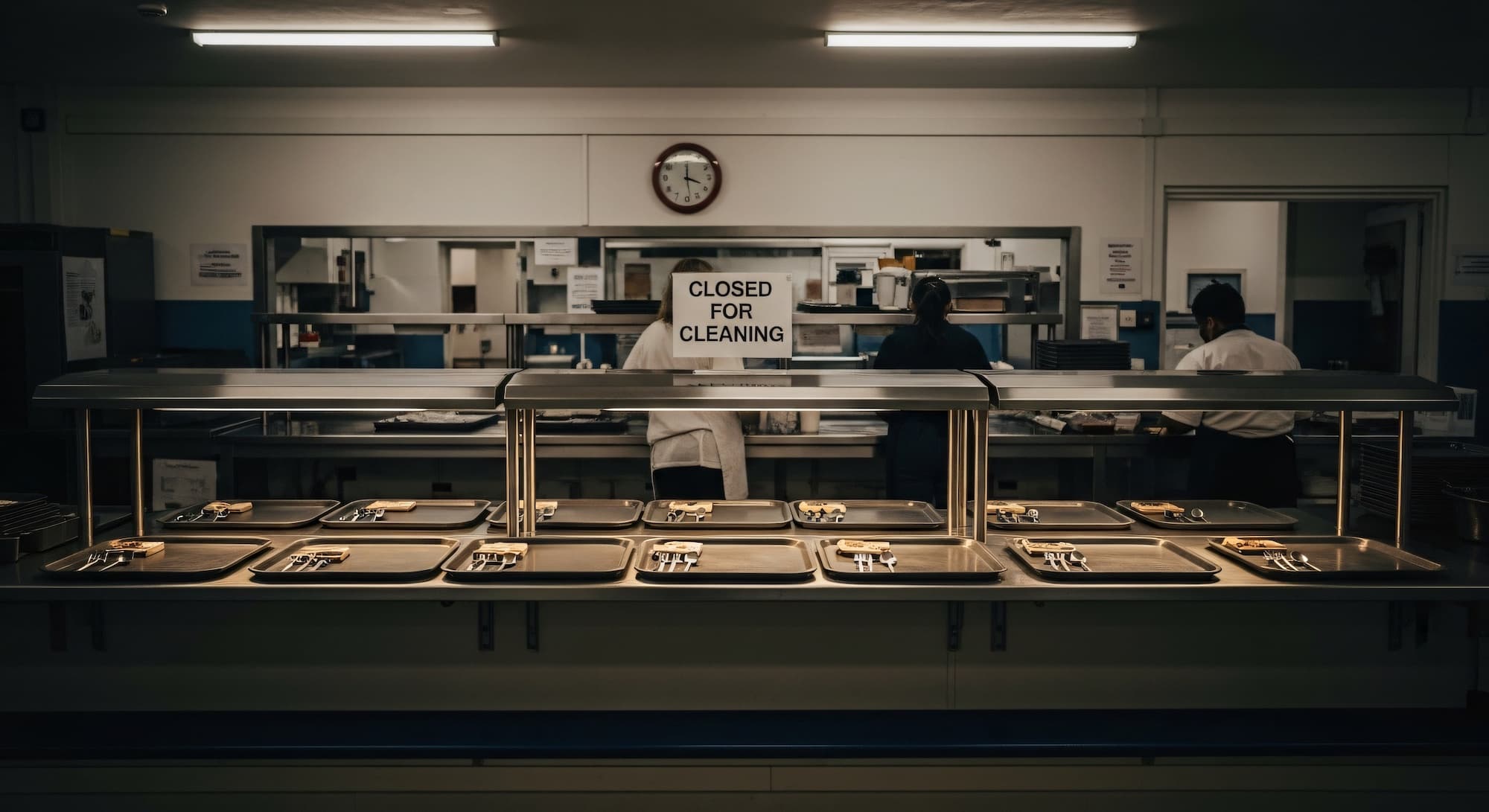
Here’s what makes it worse: After paying for construction, and then for operations every year, your cafeteria still closes at 3pm. Your second-shift workers get nothing. Weekend workers get nothing. The software engineer pulling an all-nighter gets nothing. That beautiful, expensive cafeteria becomes a ghost town 128 hours per week while employees order $20 DoorDash meals because they have no other choice.
Why Cafeterias Are Failing Across Texas
We’re watching it happen in real-time. Major corporations are shuttering cafeterias that once symbolized workplace luxury. The economics simply don’t work anymore. You need 1,000+ employees eating daily just to approach break-even, and even then, you’re managing 5-10 food service workers, dealing with health inspections, handling workers’ comp claims, and watching 2,000 square feet of premium real estate generate zero revenue.
The pandemic exposed what property managers always suspected: cafeterias are a luxury from a different era. They made sense when employees worked 9-to-5 in massive suburban campuses. They don’t make sense when your workforce is hybrid, when they work flexible hours, when a third of your building might be empty on any given day. With 75% of businesses surveyed planning to reduce their office square footage in 2024, we think cafeterias are first on the chopping block. According to FacilitiesDive, “thirty-nine percent of decision-makers said that cafeterias are “simply not used enough to validate their expense,” while 61% of those in hybrid workplaces said that scheduling makes operating a traditional cafeteria a challenge.”

When asked what leaders might replace existing cafeterias with, 28% said they imagine using the space for alternative food and dining options. Fifty-six percent said they could use the space for additional workspace.
Enter Infrastructure Thinking
This is where Raptor Vending changes the entire conversation. We’re not a cafeteria alternative—we’re dining infrastructure. Think about it like your HVAC system. You don’t staff your HVAC. You don’t subsidize your HVAC. You install it once, it runs continuously, and it just works.
Our Smart Fridge™ + Smart Cooker™ infrastructure transforms your existing break room into a 24/7 dining destination. No construction. No permits. No staff. Just infrastructure that delivers Southerleigh Hospitality Group’s chef-prepared meals at $12.50 per meal, available whenever your tenants need them.
Infrastructure That Enhances Your Building’s Investment
Many corporate cafeterias are genuinely well-designed spaces. Property managers have invested significant capital creating professional dining environments that match their building’s standards. The problem isn’t aesthetics—it’s utilization. Even the nicest cafeteria sits empty 16 hours a day. That buildout serves no one after 3pm or on weekends, exactly when your tenants are pulling long hours.
This is where Raptor infrastructure offers a different approach. Our Smart Fridge™ + Smart Cooker™ systems integrate into your existing spaces without requiring 5,000 square feet of dedicated real estate. They work 24/7, serving tenants whenever they actually need meals.
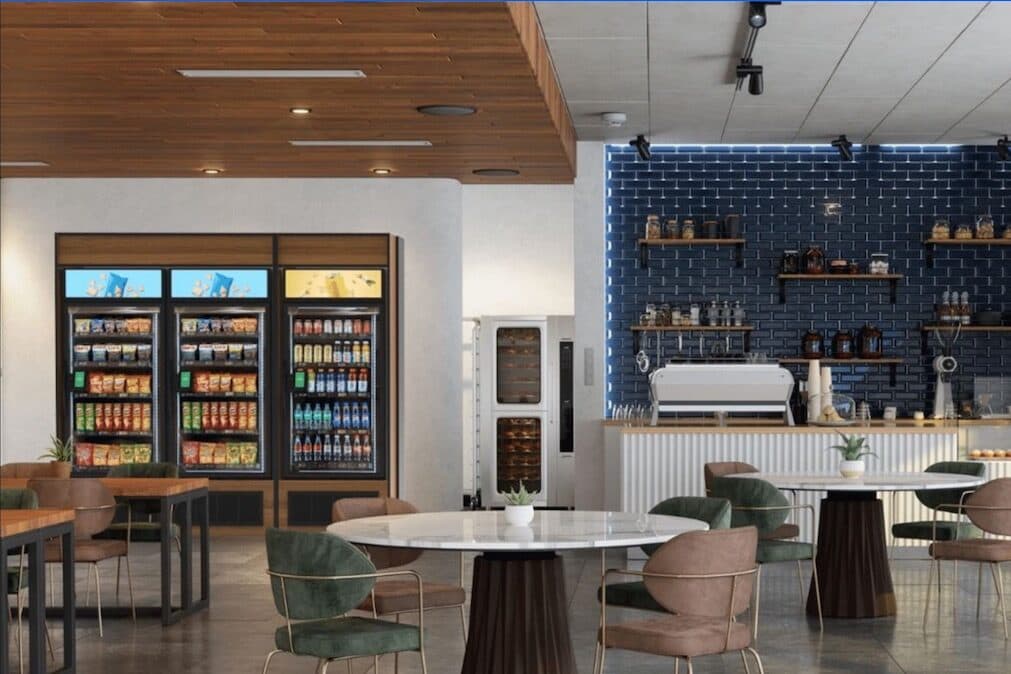
Our FixtureLite wooden enclosures ensure our infrastructure matches your building’s design language. If you’ve invested in quality finishes throughout your property, our systems can complement them with customizable wood grains and finishes. This isn’t about disguising equipment—it’s about maintaining consistent design standards throughout your building.
When you’ve already invested in making your building attractive to Class A tenants, the last thing you need is infrastructure that looks out of place. Traditional vending machines can undermine your property’s premium positioning. Raptor infrastructure with custom enclosures maintains your aesthetic standards while actually solving the dining problem—without an annual subsidy.
The Numbers That Matter
Traditional cafeterias need massive scale to survive. They require a buildout upfront and an operating budget every year, and still only serve meals 40 hours per week.
Raptor infrastructure requires zero buildout, zero subsidies, and operates 168 hours per week. And losing a tenant is expensive: CBRE measured tenant improvement allowances of $98.05 per sq. ft. in top-tier buildings in 2023, before free rent and commissions.
The real comparison isn’t about food quality—our chef partners at Southerleigh, Michelin Bib Gourmand three years in a row, ensure that’s never in question. It’s about recognizing that the era of subsidized workplace dining is over. The future is infrastructure that runs itself, pays for itself, and never needs a day off.
Stop Managing Vendors. Start Installing Infrastructure.
Texas' first Smart Fridge™ + Smart Cooker™ infrastructure. Chef-prepared meals from Southerleigh Hospitality Group at $12.50. No staff. No rent abatements or subsidies. Just 24/7 dining that runs itself.
120-Day Risk-Free Trial • No Fees or Minimums • Minimal Electrical Requirements
Ready to Install Dining Infrastructure?
Workplace Cafeteria Alternative FAQs
Everything you need to know about replacing expensive cafeteria buildouts with autonomous dining infrastructure
What is the best alternative to a workplace cafeteria?
Smart dining infrastructure—like Raptor Vending's Smart Fridge™ + Smart Cooker™ system—delivers restaurant-quality hot meals 24/7 without the kitchen buildout, staffing costs, or annual subsidies that traditional cafeterias require. It's permanent building infrastructure that operates autonomously, similar to your HVAC or elevator systems.
How much does a workplace cafeteria alternative cost compared to a traditional cafeteria?
A traditional cafeteria needs a commercial kitchen built first and money to run it every year after. In a 2024 ezCater survey, cafeteria decision makers put the average annual cost of operating a cafeteria that feeds 100 employees at about $650,000. Raptor Vending infrastructure requires zero buildout, zero subsidies, and operates 24/7. Employees pay $12.50 per chef-prepared meal—less than the cost of delivery apps—with no employer subsidy required.
Can a cafeteria alternative provide hot meals like a real cafeteria?
Yes. Raptor Vending's Smart Cooker™ uses induction heating technology to heat chef-prepared meals to perfect temperature in under 7 minutes—no microwaves, no smell, no mess. Meals are prepared weekly by chefs from Southerleigh Hospitality Group, whose restaurant has earned a Michelin Bib Gourmand three years in a row.
What's wrong with food trucks or delivery apps as cafeteria alternatives?
Food trucks require daily coordination, parking logistics, and are weather-dependent. Delivery apps cost employees $18-20+ per meal, create security concerns, and pull workers away from the office for 45+ minutes. Raptor infrastructure is permanent, operates 24/7, and delivers $12.50 meals in under 7 minutes without anyone leaving the building.
How many employees do you need for a workplace cafeteria alternative to make sense?
Traditional cafeterias need 1,000+ employees eating daily to approach break-even. Raptor Vending infrastructure works efficiently for buildings with 200+ employees—the "infrastructure middle lane" where cafeterias aren't viable but employees still expect quality dining amenities.
Is a cafeteria alternative available after hours and on weekends?
Unlike traditional cafeterias that typically close at 3pm (operating just 40 hours per week), Raptor infrastructure runs 168 hours per week—24/7/365. Night shifts, weekend workers, and software engineers pulling all-nighters all have access to hot, chef-prepared meals whenever they need them.
Do you need staff to operate a Smart Fridge + Smart Cooker system?
Zero staff required—ever. Raptor infrastructure operates autonomously like your HVAC or elevator systems. AI-powered inventory management, automated restocking alerts, and remote monitoring eliminate the need for on-site food service workers, health inspections, and workers' comp claims.
How much space does a workplace cafeteria alternative require?
Raptor infrastructure requires approximately 100 square feet of break room space with a dedicated 30A circuit. Traditional cafeterias need 2,000+ square feet of premium real estate. This space efficiency means more rentable square footage for property managers while still providing complete dining solutions.
Can I try a cafeteria alternative before committing long-term?
Yes. Raptor Vending offers a 120-day risk-free infrastructure trial—a full installation with dedicated circuits and complete setup. This isn't a demo; it's real infrastructure so you can measure actual tenant satisfaction and usage.
Is Raptor Vending available outside of Texas?
Raptor Vending currently focuses exclusively on Texas. We operate in San Antonio, and Austin and Houston are our expansion markets. This geographic concentration allows us to maintain infrastructure density, local chef partnerships with Southerleigh Hospitality Group, and 4-hour response times for service calls. We're Texas dining infrastructure, built for Texas buildings.