Stale Snacks vs. Chef-Prepared Meals
The Vending Machine Time Warp
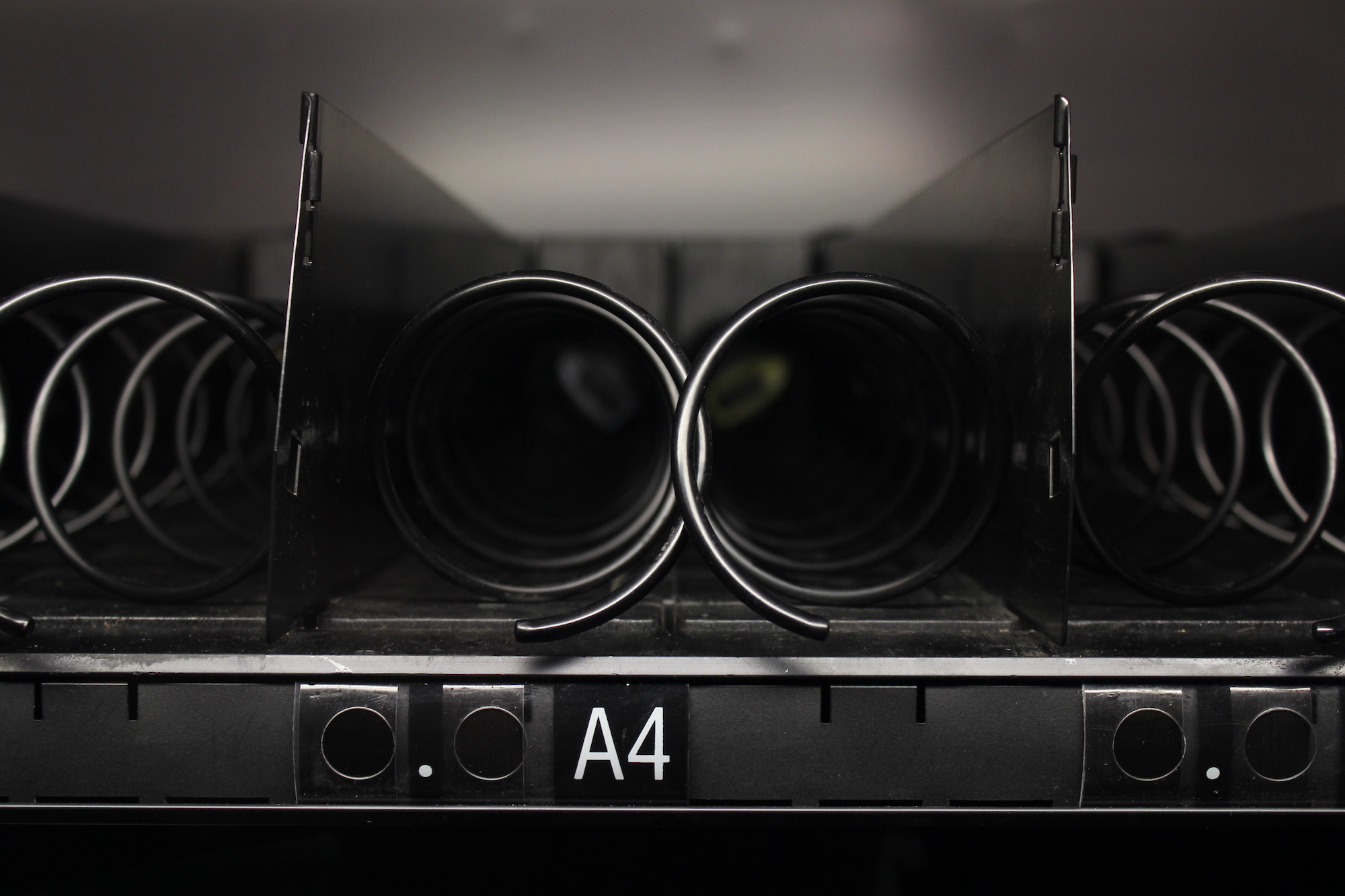
Traditional vending machines are a technology frozen in 1952, dressed up with credit card readers and LED lights but fundamentally unchanged. They dispense preserved snacks with shelf lives measured in months, drinks loaded with sugar, and if you’re lucky, a sad sandwich that tastes like refrigerator. This isn’t food—it’s emergency calories for desperate moments.
Walk into any break room with traditional vending, and you can feel the resignation. Nobody’s excited about dinner from the vending machine. It’s what you eat when you forgot lunch, when you’re working late, when you have no other options. It’s sustenance, not satisfaction. And property managers know it—vending machines don’t enhance buildings, they just fill empty corners.
The vending industry wants you to believe they’ve modernized. “Look,” they say, “we have healthy options now!” But those KIND bars and baked chips are still processed, packaged products designed to survive months in a metal box. When was the last time someone bragged about the amazing meal they got from a vending machine?
From Snacks to Infrastructure
Comparing traditional vending to Raptor infrastructure is like comparing a gas station to a restaurant. One provides emergency fuel; the other delivers dining experiences. Our Smart Fridge™ + Smart Cooker™ system doesn’t compete with vending machines—it replaces the entire concept of workplace food delivery.
LC Vending and their competitors will show you rows of machines offering 100 different candy bars and chips. We’ll show you one integrated infrastructure system delivering Butter Chicken from Michelin-rated chefs. They’re solving for 3pm snack cravings. We’re solving for hot meal cravings and everything in between with high-quality food that happens to be available 24/7.
The economics are revealing. Employees spend $2-4 on vending snacks that don’t satisfy hunger, often buying multiple items to feel full—easily reaching $8-10 for junk. Raptor delivers a complete, chef-prepared meal for $12. The vending machine is a bandaid. Smart Cooker™ infrastructure is the cure.
Why Vending Companies Can’t Compete
Traditional vending operates on a fundamentally different model. They’re logistics companies managing routes, restocking machines, and collecting coins. They make money on markups—buying that candy bar for 75 cents and selling it for $2. It’s a volume game with commodity products, and it hasn’t meaningfully changed since Eisenhower was president.
Raptor infrastructure represents a completely different philosophy. We’re not managing routes or collecting quarters. We’re installing permanent dining infrastructure that becomes part of your building’s essential systems. The Smart Cooker™ technology alone—with its induction heating that delivers restaurant-quality hot meals in 7 minutes—is something vending companies can’t replicate with our exclusive culinary partnership with Southerleigh Hospitality Group.
When property managers tell us they have vending, we don’t compete—we reframe. Vending serves breaks. Infrastructure serves workdays. Vending provides snacks. Infrastructure provides meals. Vending is what you tolerate. Infrastructure is what you promote. One is a metal box in the corner. The other is a building amenity that retains tenants.
The Building Class Indicator
Here’s an uncomfortable truth for property managers: traditional vending machines are increasingly seen as a Class B indicator. When prospective tenants tour your building and see rows of vending machines, they’re not thinking “convenient snack options.” They’re thinking “this building hasn’t invested in modern amenities.”
Raptor infrastructure sends the opposite signal. The Smart Fridge™ with its wood grain enclosure and touchscreen interface looks like it belongs in a Class A building. The Smart Cooker™ with its induction pods feels like technology from the future, not the past. When tenants see Southerleigh Hospitality Group meals available 24/7, they see a building that invests in their experience.
The choice isn’t really between vending machines and Raptor. It’s between yesterday and tomorrow. Between accepting the minimum and providing excellence. Between metal boxes dispensing processed snacks and infrastructure delivering chef-prepared meals. In five years, traditional vending machines will look as outdated as phone booths. The question is whether your building will be ahead of that curve or behind it.
Stop Managing Vendors. Start Installing Infrastructure.
Texas' only Smart Fridge™ + Smart Cooker™ infrastructure. Chef-prepared meals from Southerleigh Hospitality Group at $10-12. No staff. No rent abatements or subsidies. Just 24/7 dining that runs itself.
100%
Trial Conversion
Trial Conversion
$10-12
Per Meal
Per Meal
24/7
Availability
Availability
Zero
Staff Required
Staff Required
120-Day Risk-Free Trial • No CapEx Required • Minimal Electrical Requirements
Ready to Install Dining Infrastructure?
See why property managers are choosing permanent infrastructure over temporary vendors. Free tasting for qualified buildings.
Frequently Asked Questions About Vending Machine Alternatives
What are the best alternatives to traditional vending machines?+
The main vending machine alternatives include micro markets, smart coolers, and integrated dining infrastructure like Raptor's Smart Fridge™ + Smart Cooker™ system. While micro markets and smart coolers offer fresh cold food, only integrated infrastructure solutions provide hot, chef-prepared meals on demand. For buildings seeking complete meal solutions rather than just snack upgrades, dining infrastructure delivers restaurant-quality food without kitchen buildouts or staff.
How is dining infrastructure different from a micro market?+
Micro markets upgrade the vending experience with fresh salads, sandwiches, and better snack options—but everything is still cold. Dining infrastructure adds hot meal capability through Smart Cooker™ technology, heating chef-prepared meals to restaurant temperature in under 7 minutes using induction technology (not microwaves). It's the difference between grabbing a pre-made sandwich and sitting down to Butter Chicken or Chicken Alfredo prepared by Michelin-rated chefs.
What does a vending machine alternative cost for an office building?+
Most vending machine alternatives—including Raptor's dining infrastructure—install at no upfront cost to the building. The operator covers equipment, installation, stocking, and maintenance. Employees pay per item, typically $10-12 for hot chef-prepared meals or $3-8 for snacks and cold items. Unlike cafeterias requiring $500K+ buildouts and ongoing subsidies, infrastructure solutions are self-sustaining with zero operational burden on property managers.
Can vending alternatives provide hot food without a kitchen?+
Yes—this is specifically what Smart Cooker™ technology enables. Traditional alternatives like micro markets and smart coolers are limited to cold and room-temperature items. Raptor's infrastructure uses induction heating pods that transform refrigerated chef-prepared meals into hot, restaurant-quality dishes in 5-7 minutes. No kitchen buildout, no ventilation requirements, no cooking staff—just a dedicated 15A electrical circuit and network connection.
What's the minimum employee count for vending machine alternatives?+
Basic smart coolers and micro markets can work in locations with 50+ employees. For full dining infrastructure with Smart Cooker™ hot meal capability, buildings with 200+ employees typically see optimal usage and ROI. This "infrastructure middle lane" serves buildings too large for traditional vending satisfaction but too small to justify full cafeteria operations—the sweet spot where dining infrastructure delivers the most value.
Do vending alternatives require staff or daily management?+
Modern vending machine alternatives operate autonomously. Smart coolers and micro markets require periodic restocking but no on-site staff. Raptor's dining infrastructure takes this further—AI-powered inventory management, automated payment processing, and remote monitoring mean the system runs 24/7 without human intervention. Property managers don't manage vendors; they install infrastructure that runs itself like HVAC or elevators.
Which vending alternative is best for Class A office buildings?+
Class A buildings increasingly view traditional vending machines as outdated amenities. For premium positioning, integrated dining infrastructure with architectural customization (wood enclosures, custom wraps) signals investment in tenant experience. The combination of modern technology, chef-prepared meals, and autonomous operation positions buildings competitively against newer developments—turning the break room from an afterthought into a marketable amenity.
Can vending alternatives work alongside existing cafeteria programs?+
Absolutely. Many facilities with Aramark, Sodexo, or Compass Group cafeterias add dining infrastructure for after-hours coverage, satellite locations, or spaces the main program can't serve profitably. Universities use infrastructure in dorms and libraries where cafeterias don't reach. Hospitals deploy it for night-shift workers. The infrastructure complements rather than competes—filling service gaps that traditional food service contractors can't address economically.