
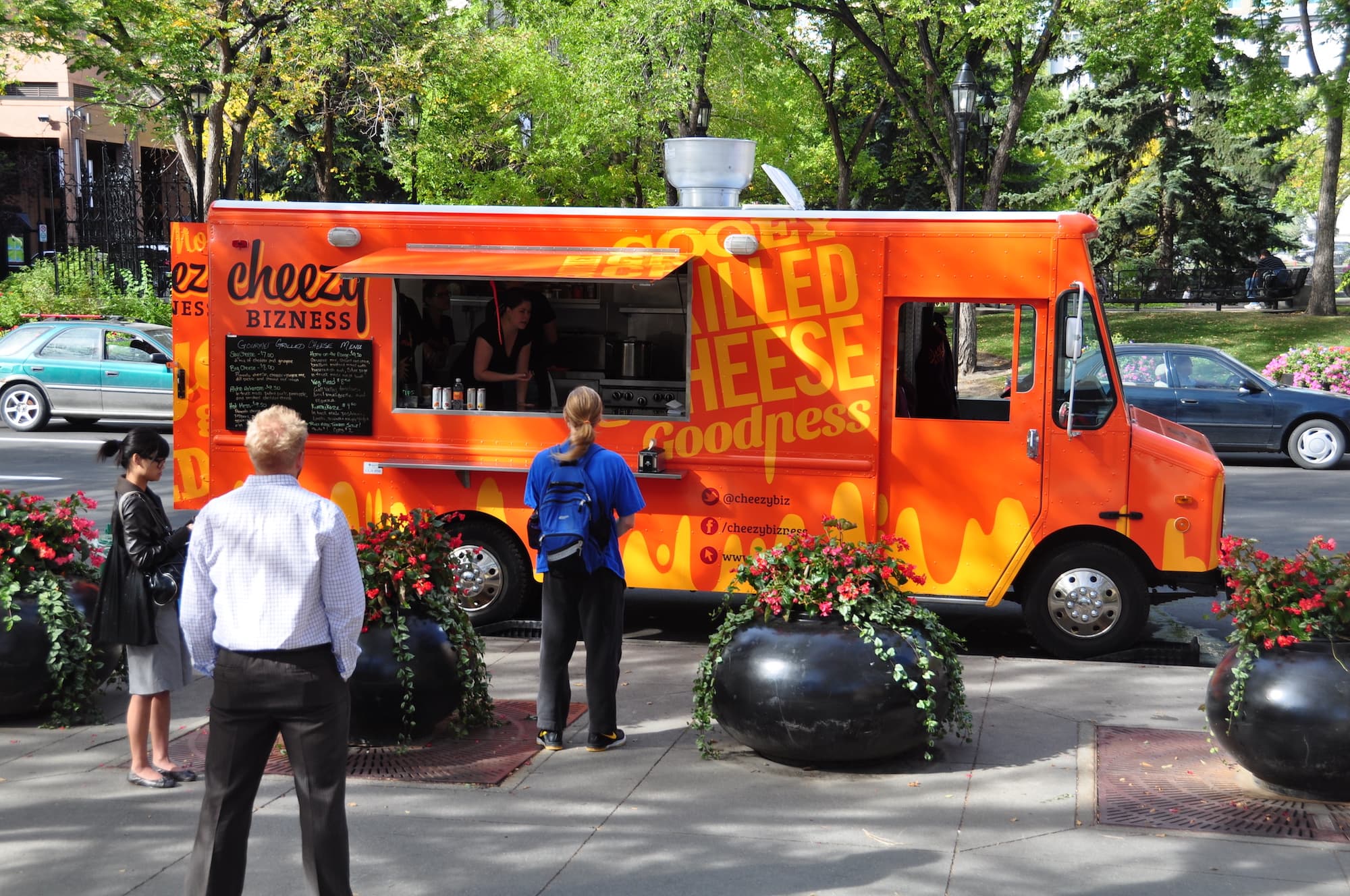
Food Trucks For Office Buildings
vs. Always Available Infrastructure
The Food Truck Shuffle
Companies exploring food trucks for office buildings face a fundamental challenge: vendors operate on their schedule, not yours. While food trucks promise variety and fresh meals, the reality for workplace dining is weather cancellations, 45-minute lunch lines, and parking logistics that disrupt operations. Raptor Smart Fridge infrastructure delivers the same chef-prepared variety at identical price points—but as permanent infrastructure that operates 24/7/365, regardless of weather, without lines, and without turning your parking lot into a food court.
Food Truck Reliability: The Data
Weather-Related Closures
Over 40% of food trucks report having to close or change operations due to weather extremes [3]. This isn’t just rain delays—it’s a fundamental operational flaw. One of the biggest hurdles when operating a food truck is something that cannot be controlled – the weather. Extreme cold or hot temperatures, snow, and rain can have a serious impact on sales for the day or even the week [4].
Failure Rates
The food truck industry faces brutal economics. The figure most often repeated is that about 60% of food trucks fail within their first three years [4]. Treat it with care: when Toast looked for the data behind it in 2025, it could not find any [5]. The best-studied comparison is restaurants, where an Ohio State study of more than 2,400 restaurants in Columbus found that about 26% failed in the first year and 59% within three [6]. Even the trucks that survive face constant operational challenges.
Seasonal Dependency
Food truck operations are often weather-dependent, with sales fluctuating based on seasonal factors and adverse weather conditions. Inclement weather, such as rain, snow, or extreme heat, can significantly impact foot traffic and sales, leading to revenue losses for operators [1].
The Texas Reality
In Texas specifically, the weather challenges are even more severe. Summer heat regularly exceeds 100 degrees, making parking lot dining unbearable. Winter freezes shut down operations entirely. Spring thunderstorms arrive without warning. Unlike traditional restaurants that can serve customers year-round in snow, sleet, or hail, food trucks are most productive when the weather is good. Customers don’t want to stand around in the wind and rain to eat their taco when they can dine indoors nearby [2].
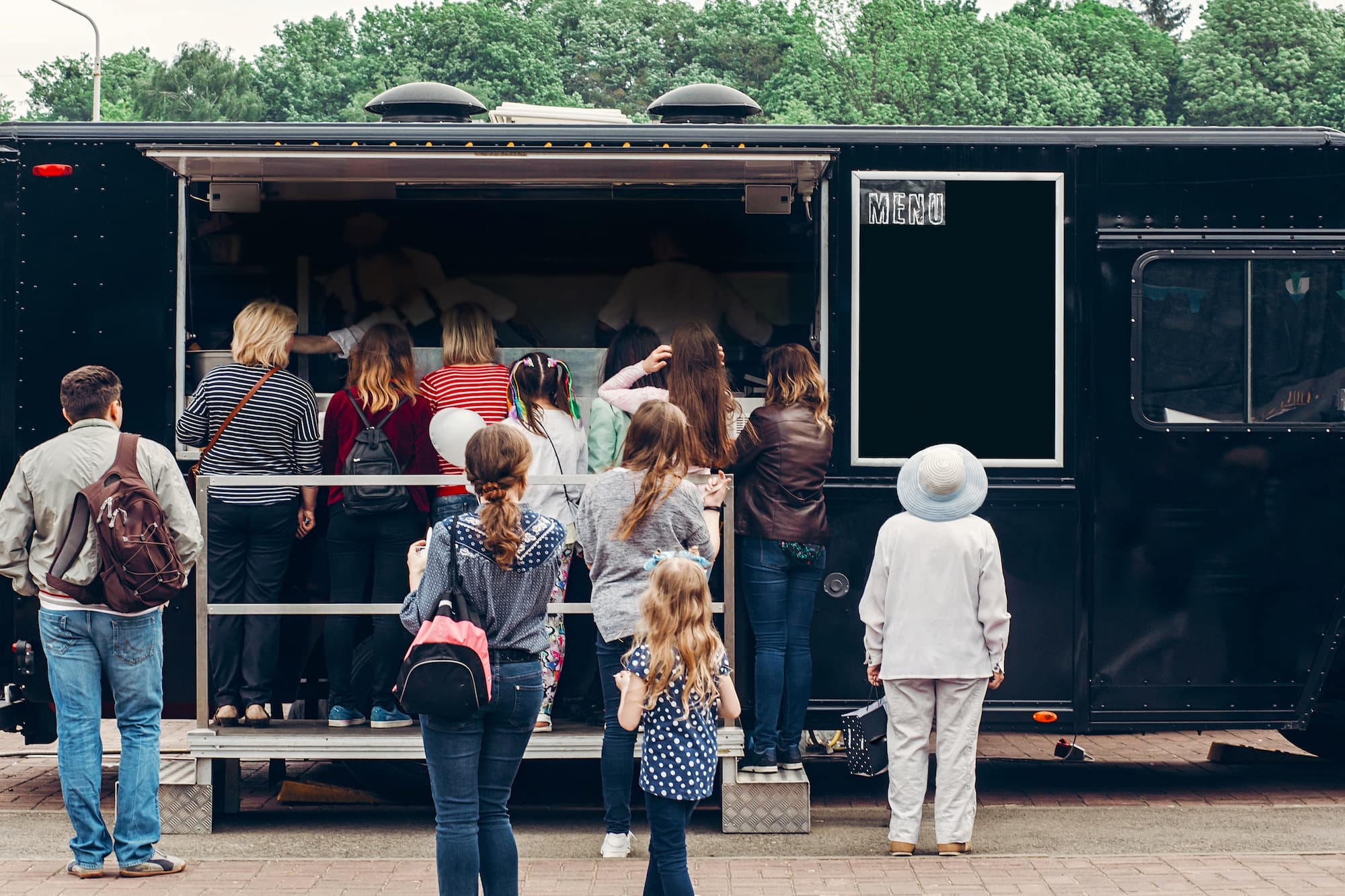
Infrastructure Doesn’t Cancel
Raptor infrastructure operates like your building’s essential systems—always on, always available, never dependent on weather or someone’s business decision. Our Smart Fridge™ + Smart Cooker™ system delivers the same variety as food trucks but with absolute reliability. Tuesday at 2am? Hot Butter Chicken ready in 7 minutes. Sunday during a thunderstorm? Jerk Chicken with Coconut Rice, perfectly heated.
The variety argument falls apart when you consider our rotating menu of 16+ dishes from Southerleigh Hospitality Group. Food trucks might offer different cuisines each day, but they’re still serving the same 8-10 items from that single truck. Our infrastructure delivers Mexican on Monday, Italian on Tuesday, Asian fusion on Wednesday—except it’s all available every day, any time.
And let’s talk about summer in Texas. When it’s 103 degrees in Houston, nobody wants to stand on blazing asphalt waiting for food. Our infrastructure lives in your air-conditioned break room or common area. No heat stroke. No thunderstorm soakings. No winter freezes. Just walk down the hall, grab your meal, and get back to work.
The Permanent Solution
Food trucks are a band-aid on a bullet wound. They create an illusion of solving workplace dining while actually highlighting its absence. Every time a truck doesn’t show, every time the line is too long, every time it’s too hot or too cold or too wet—your tenants are reminded that their building doesn’t have real dining infrastructure.
Raptor doesn’t schedule. We install. Once our infrastructure is in place, it becomes as permanent and reliable as your plumbing. Property managers who switch from food trucks to Raptor report an immediate end to food-related complaints. Not reduced complaints—eliminated complaints. Because infrastructure doesn’t cancel, doesn’t run late, and doesn’t decide that the festival across town pays better.
Stop Managing Vendors. Start Installing Infrastructure.
Texas' first Smart Fridge™ + Smart Cooker™ infrastructure. Chef-prepared meals from Southerleigh Hospitality Group at $12.50. No staff. No rent abatements or subsidies. Just 24/7 dining that runs itself.
120-Day Risk-Free Trial • No Fees or Minimums • Minimal Electrical Requirements
Ready to Install Dining Infrastructure?
References
- Custom Market Insights. (2025, September 18). US food truck market size, trends, share, forecast 2033. https://www.custommarketinsights.com/report/us-food-truck-market/
- Epos Now. (2021, April 14). What is the average food truck success rate? https://www.eposnow.com/us/resources/what-is-the-average-food-truck-success-rate/
- FoodParks.io. (2024). 2024 statistics of the food truck industry. https://www.foodparks.io/blog/2024-statistics-of-the-food-truck-industry
- Wayback Burgers Franchising. (n.d.). Food truck failure rate vs. restaurants: Reliable low-cost options. https://waybackburgers.com/franchising/blog/food-truck-failure-rate/
- Toast. (2025, January 28). What is the average food truck failure rate? (2025 data). https://pos.toasttab.com/blog/on-the-line/food-truck-failure-rate
- Ohio State News. (2003, September 7). Restaurant failure rate much lower than commonly assumed, study finds. https://news.osu.edu/restaurant-failure-rate-much-lower-than-commonly-assumed-study-finds/
Frequently Asked Questions
Everything you need to know about food trucks vs. permanent dining infrastructure
What is the failure rate for food trucks?
There is no reliable failure-rate figure for food trucks on their own. The number most often repeated is that about 60% close within three years (Wayback Burgers), and when Toast looked for the data behind it in 2025, it could not find any. The best-studied comparison is restaurants: an Ohio State study of more than 2,400 restaurants in Columbus found that about 26% failed in the first year and 59% within three. Either way, a food truck is a small business that can close or stop coming, and when it does, property managers are left finding a replacement. Permanent infrastructure does not have that problem.
How does weather affect food trucks for office buildings?
Over 40% of food trucks report having to close or change operations due to weather extremes. In Texas, summer heat exceeding 100 degrees, winter freezes, and unpredictable thunderstorms make food trucks an unreliable option for consistent workplace dining. Smart Fridge™ + Smart Cooker™ infrastructure operates indoors, unaffected by weather conditions—available 24/7/365.
What is the alternative to food trucks for office buildings?
Smart Fridge™ + Smart Cooker™ infrastructure provides permanent workplace dining that operates 24/7/365 regardless of weather. Unlike food trucks that require scheduling and parking logistics, dining infrastructure integrates into your building like HVAC or elevators—always available, never cancelled. Raptor Vending was the first to bring this integrated infrastructure to Texas.
How do food truck prices compare to Smart Fridge infrastructure?
Both food trucks and Raptor Smart Fridge infrastructure offer meals at similar price points, and Raptor meals are $12.50. However, infrastructure eliminates the hidden costs of food truck programs: parking lot management, weather cancellations, long wait times reducing productivity, and vendor coordination overhead. With infrastructure, there's no ongoing management burden for property managers.
Can workplace dining infrastructure match food truck variety?
Yes. Raptor infrastructure offers 16+ rotating dishes from Southerleigh Hospitality Group including Mexican, Italian, Asian fusion, Caribbean, Indian, and Mediterranean cuisines. Unlike a single food truck serving 8-10 items, all menu options are available every day, any time—including nights and weekends when food trucks aren't operating.
What happens when food trucks don't show up to office buildings?
When food trucks cancel due to weather, festivals, mechanical issues, or business decisions, employees are left without their expected dining option. This creates tenant complaints for property managers and highlights the absence of permanent dining infrastructure. Smart Fridge™ + Smart Cooker™ systems eliminate this uncertainty. They sit indoors and run around the clock, and Micromart publishes 99.9% store uptime for the Smart Fridge™ platform.